


My name is Adib Muttaqin Asfar, born 35 years ago in Kudus — a small district in the north-eastern part of Central Java. I was raised in a small family in the 1990-s era when the music industry was at its peak, at least many people said the same. Like many kids and teenagers in that era, especially those who live in the suburban sub-district, I grew up like the common urban youth.
I loved music (although I have no skill in music), moreover western pop and rock musicians genres. But I had more music references in my head rather than my friends whose good musical skill. Most of them loved Padi, Dewa 19, or Sheila on 7. I liked them too, but I like listening to the songs from Nirvana, Guns n Roses (but not Metallica), Sting, Michelle Branch, and a few classic boy bands such as Boyzone and PJ n Duncan. I was so lucky to live in a decade when MTV penetrated the Indonesian entertainment business market. It is an abroad television network that was booming in the 1990-s and I was one of the fans. So everything looked normal in my younger life.
However, behind that pleasure, there was something else I worried about. This concern appeared since I became a teenager when I understood enough about a hidden conflict and potentially striking on my life one day. I started to realize that I and my family were a minority.
Note that the word “minority” I used is not in the term of race, ethnicity, or religion. We are a Javanese family like many others even though my father was presumed to have Arabian blood. We were considered a minority because most people in my village looked at us as a different family. My dad is a religious person and well educated in some religious schools. That formal religious education and his strong interest in many classical books about Islam for a long time had influenced my father’s thoughts. That is why he developed his idea for his cultural “dakwah”, a religious mission to persuade people to change their lives. His idea was a fit to the mission of Muhammadiyah, the second biggest Islamic organization in Indonesia but also a minority in the northern part of Central Java.
My father found his way for the mission after we moved from Kauman (the old town in the Central Kudus) to Juwet, a kampong in the village of Ploso (about 5 km away from Kauman) where most people had no knowledge about religion at all. There was no mosque or any space for prayer when we moved there in 1993. That year is also the second year of my study in Muhammadiyah Madrasah Ibtidaiyyah or Islamic elementary school.
This situation encouraged my father to started his mission. He invited our neighbors to come to my home to conduct salat (prayer) with true manners. He introduced everything about the five obligations of Moslem from the entry-level. He started the effort by introducing how to have “wudu” (washing some parts of the body before prayer), cleaning bodies from “najis” (all kinds of dirt causing unsacred) and “hadas” (all things causing prayer unaccepted by God). He also advised villagers not to pup on the river and suggest them to build a private toilet at their home respectively.
He did these activities patiently and consistently almost every week on Thursday night. On that day, we held a small “pengajian” or informal class to learn more about Islam and the only lecture was my father. There was serendipity when we headed to Ramadan in the first year we lived there. That moment was used very well by my father to disseminate the religious values, principles, and practices into a wider target.
In the first year, the taraweeh prayer was always conducted at my home. But in the following year, tens of families agreed to host the taraweeh prayer every night alternately. That is the best year for my father’s mission in the village. But it was just temporary.
After that year, a negative reaction appeared to respond to my father’s teaching. In the beginning, some people accused my father of spreading unusual lectures and deviating from the tradition. I did not really know what tradition they refer to because I knew they had no sight of how to make life better. They also, mostly, were living in a slump environment and my father was trying to change it.
Because of the black campaign, my father’s followers were getting away from us slowly but surely. They moved to another group that was initiated by the chief of the environment (just name him N) and his wife. Next, I finally knew the reason behind this movement but I realized that the conflict was just beginning.
The N’s wife often made bad campaigns about my father in many forums. She said that my family is not an inlander, not a part of locals, and just newcomers, in order to segregate us from our environment. The most significant thing in many of her statements is dubbing us as “MD”, the abbreviation of Muhammadiyah, and she claimed herself as a part of another big Indonesian religious organization. She assumed these organizations were like sects that were on the contrary to each other. This reason finally encouraged many people to get away from my family.
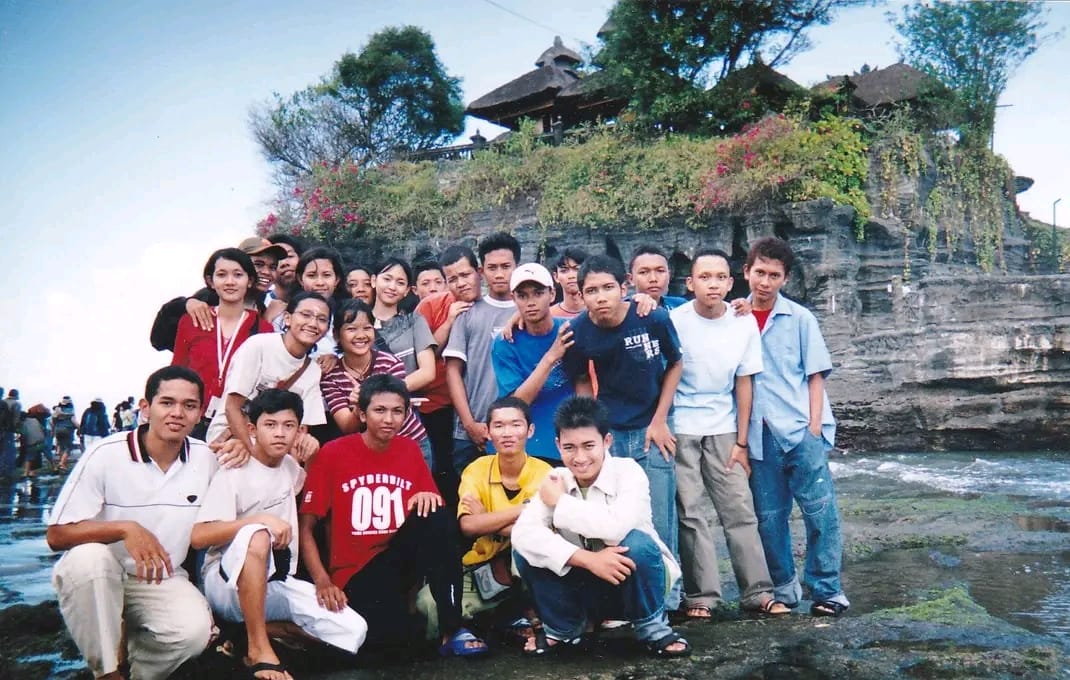
These experiences have influenced my life deeply, particularly when I found myself in some plural societies since I was in high school. I studied in SMA 1 Kudus, a top senior high school in the town, and made friends with many students with various backgrounds, religions, and ethnicities. In my third year of senior high school, about 60% of my classmates are not Moslem and about 30% of them are of Chinese descent. That was the most plural classroom in my home town (at least in 1998 to 2001) and probably in Java and I am always proud of being a part of them.
That situation encouraged me to be more tolerant and appreciative of others no matter their beliefs or ethnicity. I realized it did not happen in all places in this country and not all people have the same experiences with me. Many students just have a very homogenous environment in their classrooms because they enrolled in private schools.
I think this is why many people just see others with different beliefs and ethnicities as strangers. They never blended to people with other beliefs and never got in touch with anyone outside of their closed group. Finally, I was lucky for being a minority when I was younger, an experience that not all people have.







Komentar ()
Silakan masuk ke akun Anda untuk ikut berdiskusi dan menulis komentar.
Masuk ke AkunBelum ada komentar. Jadilah yang pertama memberikan tanggapan!